Media
Contact
Communications Specialist
Faculty of Engineering
Spencer Engineering Building
Room 2072
Western University
Tel: 519-661-2111 ext. 87015
Email: engineeringcomms@uwo.ca
Vicki Fecteau, BESc’66: Reflections on innovation and growth
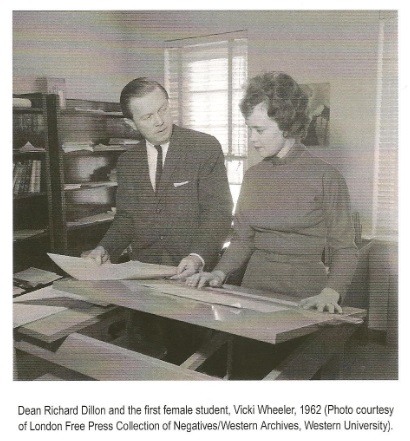 In 1962, Vicki Fecteau walked into Western Engineering as its first female student. She wasn’t making a statement — she was pursuing an education. But in doing so, she opened a door that had never been opened before, in a Faculty where every jacket in the lecture hall belonged to a man. Four years later she graduated with her BESc and stepped directly into one of the most electrifying technological moments of the twentieth century: the dawn of modern computing at IBM.
What followed was a career that proved, repeatedly and on her own terms, that engineering is a discipline where the work speaks for itself. Vicki was among the first wave of technical professionals to help bring an entirely new family of computers into the world, at a time when the field was so new that universities hadn’t yet written the curriculum to teach it. She navigated that frontier with the same quiet resolve she brought to Western — adapting, innovating and thriving in a field that was evolving by the day.
Engineering Communications spoke with retired engineer Vicki Fecteau to learn about her experience as Western Engineering's first female graduate, the early days of computing at IBM and what she would tell today's students about forging their own path.
You graduated in 1966 and went on to a career at IBM — what was it like navigating those early years in a field where women were so rare?
I’ve often thought about how fortunate I was to begin my career at IBM. It felt like stepping into the centre of a technological awakening. A new family of computers had just been announced, and suddenly I found myself on the front lines, helping to bring them into the world. The hours were long — sometimes maddeningly so — but there was a shared thrill in the work. We were young, determined and convinced we were building the future, one installation at a time.
Back then, universities didn’t offer computer science courses. The field was too new, too undefined. So IBM took it upon itself to train those of us who showed an aptitude for programming. In my basic training class of about thirty, there were four other women. They weren’t engineers, but they were bright, capable graduates in math and science, and together we navigated this unfamiliar terrain. We didn’t yet have the language for what we were doing; we simply learned, adapted and kept going.
What I loved most about my technical work at IBM was its clarity. My results spoke for me. If I wrote a program that ran cleanly or installed a system that performed exactly as it should, that was the proof. No one could argue with a machine that worked. In a world where women’s contributions were often questioned or minimized, the objectivity of technology felt like a kind of refuge.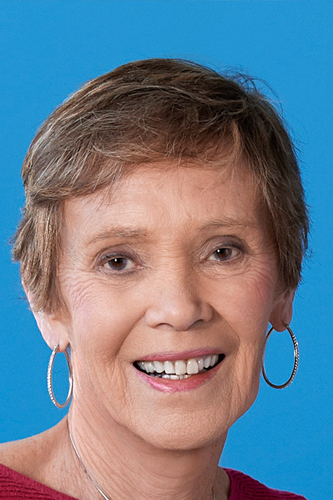 Looking at Western Engineering today versus when you were a student, what’s the most meaningful change you’ve seen?
It’s funny to see students walking around with phones where slide rules once lived in every pocket. And the clothes! Back then, the men showed up in jackets and ties, and I wore a suit or a dress. Yet some traditions endure: the universal stress of lab reports and the looming specter of final exams.
What would you want current engineering students — especially those who feel like they’re breaking new ground in some way — to know?
Over the years, I learned that change arrives whether we welcome it or not, so it’s better to meet it with openness than resistance. When you believe in an idea, have the courage to voice it; progress has always depended on someone willing to speak first. And when you make a mistake — as everyone does — own it, apologize, fix what you can and keep moving forward. Treat people with respect, even when they see the world differently than you do. And if you’re pursuing an engineering path, apply for your P.Eng. licence as soon as you can after graduating; it’s a foundation that will serve you throughout your career.