Media
Contact
Communications Specialist
Faculty of Engineering
Spencer Engineering Building
Room 2072
Western University
Tel: 519-661-2111 ext. 87015
Email: engineeringcomms@uwo.ca
The Future of Wind Engineering
By Nicole Laidler | June 20, 2013
An international leader in wind engineering and research for more than 40 years, Western Engineering’s newest facility will truly blow away the competition.
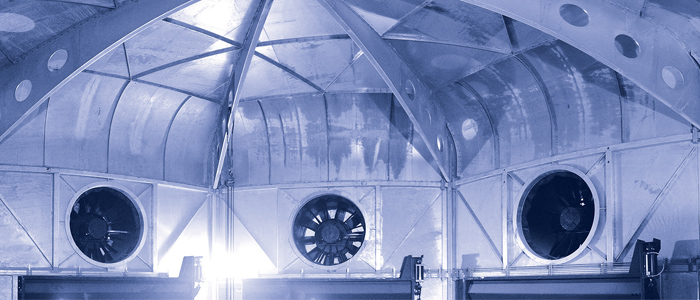
When it opens this fall, the Wind Engineering, Energy and Environment (WindEEE) Dome, will be the world’s first three-dimensional wind dome, and the most advanced wind-research facility in the world. The $30 million project was partly funded through The Canada Foundation for Innovation and the Ontario Research Fund; its official opening is October 17.
Now in the final phase of construction at London’s Advanced Manufacturing Park – a joint venture between Western University, Fanshawe College, and the City of London – WindEEE will allow researchers to simulate and study intense wind systems like tornados, downbursts and gust fronts for the very first time.
These types of localised storms are responsible for an estimated 67 per cent of all wind damage in North America, totaling $6 billion in annual losses.
“They are not huge storms, but they are devastating,” says Horia Hangan, Director of WindEEE Research Institute and BLWTL. “They have wind speeds very similar to hurricanes, but they flourish out of nothing, they do the damage, and they disappear.”
Conventional wind tunnels, like Western’s Boundary Layer Wind Tunnel Laboratory (BLWTL), are essentially long rooms with fans at one end.
While they are very useful for studying the effects of typhoons and hurricanes, Hangan explains that they are unable to simulate axisymmetric wind systems. “Because of that, no structure in the world is actually designed to withstand these local storm systems [thunderstorms and tornados]. They are all designed to take straight winds.”
At 40-metres across (25 metres diameter for the inner dome and 40 metres diameter for the outer return dome), WindEEE dwarfs previous wind research facilities. With more than 100 specialized fans and an unprecedented topographic capability, the six-sided dome will allow researchers to recreate realistic wind systems on a larger scale, and with greater accuracy, than ever before.
“The first thing to be tested will be the impact of tornadoes on large buildings,” says Hangan. But data generated by WindEEE will do much more than simply lead to more wind-resistant buildings, bridges, and power transmission lines.
WindEEE will play a key role in optimizing the efficiency of wind turbine design and the energy output of wind farms, says Hangan. “At this point, wind farms generally under produce by about 15 per cent compared to what the models predict. That represents a huge monetary value,” he says.
Other research will focus on the wind’s environmental impact on cities, agricultural crops and forests, as well as the distribution patterns of airborne pollutants.
While Hangan has been working on the WindEEE Dome project since 2008, the limitations of conventional wind tunnel design were noted by Alan Davenport, who founded the BLWTL in the early 1960s.
Davenport, who died in 2009, was working with the transmission line industry to study the problem of transmission tower collapses. “Thunderstorms have high velocity right near the ground, so the tower collapses in a different way than expected,” Hangan explains.
“He showed us the problem and we put the group together and started researching it, which we’ve been doing for the past 13 or 14 years. In that sense, [Davenport] initiated the whole momentum that has brought us to WindEEE.”
With construction of the WindEEE Dome almost complete, Hangan is looking forward to welcoming researchers and industry partners from around the world.
"It's a totally novel concept so it will be very interesting to see it work," he says."I think the most exciting thing, after the engineering, will be to get the people in to play and do new things that we probably haven't even thought of yet."