
News
Contact Us
Dr. M. Dagnew, Director
Email: mdagnew@uwo.ca
M. Richards, Coordinator
Email: mricha43@uwo.ca
News
Thursday, July 30, 2026Building Smarter, More Resilient Water Systems: The Western Water Centre’s Vision for Impact
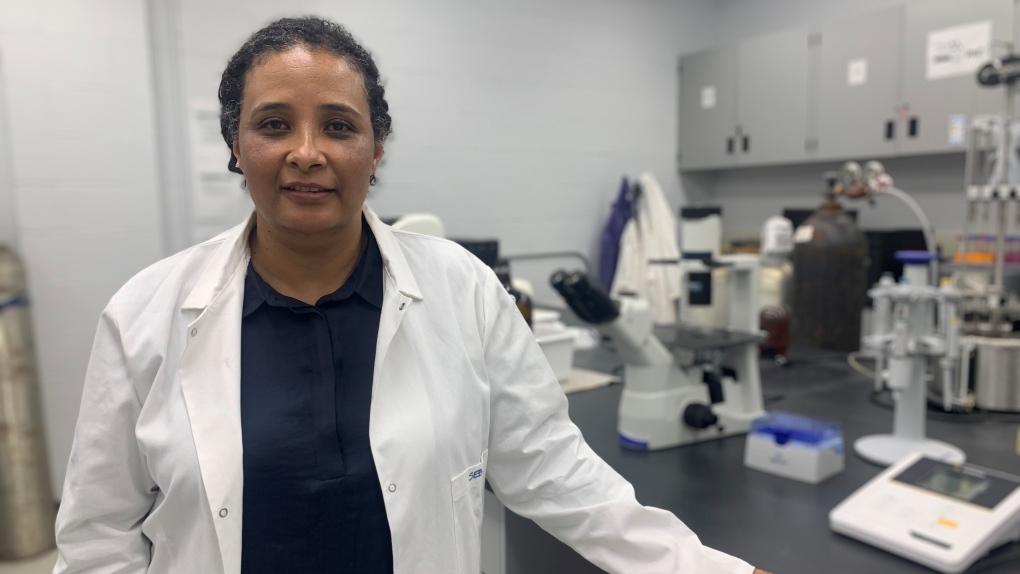
As water systems face increasing pressure from climate change, emerging contaminants, aging infrastructure, and rising demand, the need for practical, scalable solutions has never been greater. At Western University, the WesternWater Centre (WWCTR) is responding to these challenges by bringing together researchers, industry partners, government agencies, and communities to advance collaborative, applied water research.
Under the leadership of its Director, Dr. Martha Dagnew, the Centre is building on a strong legacy of research excellence while sharpening its focus on developing smarter and more resilient water systems. The emphasis is not only on generating new knowledge, but on ensuring that knowledge can be translated into real-world solutions that improve water infrastructure and environmental outcomes.
“The focus is realizing that we have challenges, and they are not going to get better on their own,” says Dagnew. “It is important to work collaboratively and bring together expertise to solve them.”
From Research Excellence to Applied Water Innovation
At its core, the Centre brings together expertise spanning water quality, treatment technologies, resource recovery, climate resilience, and environmental protection. Its work is grounded in a One Water perspective that recognizes the interconnected nature of drinking water, wastewater, stormwater, surface water, and groundwater systems.
What distinguishes WWCTR from many other research centres is its deliberate focus on smart and resilient water systems supported by both deep scientific expertise and real-world implementation capacity. Rather than treating research as an end in itself, the Centre prioritizes solutions that can be tested, validated, and deployed in operational environments.
“Our researchers work on different aspects of water systems, but the common goal is making those systems smarter, more resilient, and better equipped to address future challenges,” explains Dagnew.
A defining strength of the Centre lies in its ability to bridge fundamental research and applied problem-solving. WWCTR supports work ranging from early-stage scientific discovery to field-scale demonstration, ensuring that innovations do not remain confined to the laboratory. Researchers actively engage with operational systems, pilot studies, and full-scale environments to understand how technologies perform under real conditions.
This applied orientation is particularly important in water research, where performance can vary significantly between controlled experiments and real-world implementation. By working across scales, researchers are able to identify challenges early and refine solutions to meet practical requirements.
Large-scale infrastructure and field-based research play a central role in this approach. WWCTR is known for leveraging environments that closely reflect real operating conditions, allowing technologies to be evaluated in contexts that mirror full-scale deployment. These capabilities are essential for advancing solutions that are both technically sound and operationally viable.
Among the Centre’s key assets is the London Wastewater Facility, a demonstration-scale research facility located at the City of London’s wastewater treatment infrastructure and managed by Western University under the leadership of Dr. Dagnew. While the facility itself is a major platform for applied research, its development is closely tied to the Ontario Water Consortium (OWC), which played a foundational role in mobilizing the original infrastructure investments that enabled its creation. Importantly, OWC’s contribution extends beyond capital support. Over the past 15 years, OWC has acted as a key convenor and ecosystem builder, connecting Western with industry, government, and utility partners across Ontario and helping to shape a collaborative model for water innovation. This long-standing partnership has been instrumental in positioning Western as a leader in applied, industry-relevant water research. Today, the facility continues to operate within this broader ecosystem, providing a critical environment for testing and validating technologies under real operating conditions while benefiting from the partnership networks and collaborative frameworks that OWC helped establish.
In addition to the London facility, WWCTR is expanding its capabilities through new and emerging infrastructure. This includes the development of a Core Water Facility designed to support advanced analytical research for both academic and industry users, as well as efforts to establish enhanced capacity for emerging contaminants research. Together, these investments strengthen the Centre’s ability to support complex water challenges at multiple scales.
Partnerships Driving Impact and Future Growth
The Centre’s infrastructure is complemented by its strong partnerships across industry, government, and the broader innovation ecosystem. WWCTR works closely with technology developers, municipalities, utilities, consultants, and government agencies to address real-world water challenges. These collaborations are structured around specific problems rather than generic research themes, ensuring that projects remain focused, relevant, and impactful.
A key aspect of this model is aligning projects with researchers who already possess deep expertise in the relevant area. This approach increases both the efficiency and quality of research outcomes, while ensuring that partners are supported by teams with a strong track record in the subject matter.
“We want projects to go to researchers who already have expertise in that area,” says Dagnew. “There is always discovery, but partners need confidence that they are working with people who understand the challenge.”
WWCTR also emphasizes team-based research, bringing together multiple experts across disciplines to address complex water challenges. This collaborative structure enables more comprehensive problem-solving and supports innovation that spans technical, environmental, and operational dimensions. Research engineers, postdoctoral fellows, and graduate students all contribute to this ecosystem, providing both depth and flexibility in project delivery.
Over time, this model has helped establish strong and sustained relationships with partners who value both the Centre’s technical capabilities and its commitment to delivering practical outcomes. The ability to consistently move from concept to validation remains one of WWCTR’s most important strengths.
Looking ahead, Dr. Dagnew sees significant opportunity to expand the Centre’s impact by deepening interdisciplinary collaboration. While WWCTR has strong foundations in engineering, future growth will increasingly involve closer integration with fields such as environmental science, health, and business. Emerging areas such as One Health, environmental impacts on human systems, lifecycle assessment, and international collaboration are expected to play a growing role.
Equally important is strengthening collaboration within the research community itself. By connecting expertise across disciplines and research groups, the Centre aims to tackle larger and more complex challenges that cannot be addressed in isolation.
“The potential is enormous,” says Dagnew. “We have exceptional researchers with decades of experience. My role is to bring people together and help create the collaborations needed to solve bigger problems and make a meaningful impact.”
As the Centre continues to evolve, its focus remains clear: advancing collaborative, applied research that delivers practical solutions for water systems. Through a combination of research excellence, large-scale infrastructure, and strong partnerships, WWCTR is helping to shape the future of smarter and more resilient water systems in Ontario and beyond.
Monday, March 16, 2026Western Water Centre Hosts Inaugural Symposium
On March 5, the Western Water Centre hosted its inaugural Symposium, bringing together students, researchers, and industry partners to share ideas and highlight emerging research in water science and engineering.
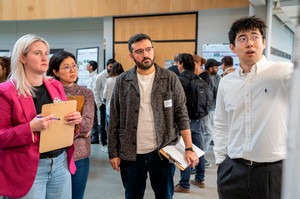 A central feature of the event was a series of student research poster presentations, where graduate students showcased their work and engaged in discussions with faculty members, industry representatives, and fellow researchers. The poster session provided an opportunity for students to present innovative approaches to water-related challenges while receiving valuable feedback from experts in the field.
The Symposium also featured a guest lecture by Dr. Caetano Dorea from the University of Victoria. In his talk, Dr. Dorea discussed the challenges of designing and operating water and wastewater infrastructure in contexts where monitoring capacity is limited due to scale, geography, or resource constraints.
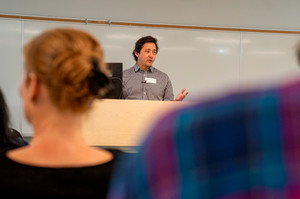 Drawing on research from the Public Health & Environmental Engineering (PH2E) Lab at the University of Victoria, Dr. Dorea highlighted efforts to strengthen measurement and process understanding across drinking water and sanitation systems. His research includes microbial monitoring in low-resource settings, spectroscopic approaches for estimating disinfection by-product formation in Canadian municipalities, and studies examining septic system performance and greenhouse gas emissions. The work demonstrates how high-resolution scientific approaches can inform practical decision-making, particularly in situations where resources, data, or infrastructure are limited.
In addition to the presentations, the event provided valuable networking opportunities between students and industry partners. Attendees were able to exchange ideas, discuss emerging challenges in the water sector, and explore potential collaborations.
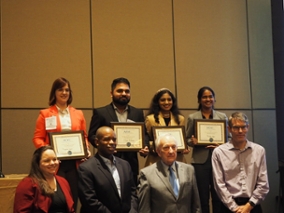
Student poster awards were presented to recognize outstanding research contributions. First place was awarded to Grant Hodgins and Junwei Zhu. Second place went to Teshikha Srivastava and Madeline Swart, and third place was awarded to Omar Mohamed.
The inaugural Symposium marks an important milestone for the Western Water Centre and reflects its commitment to fostering collaboration, promoting knowledge sharing, and showcasing the impactful research being conducted within the water community
Friday, October 24, 2025Two members of the Western Water Centre, Dr. Geneviève Metson and Dr. Christopher Power, have received John R. Evans Leaders Fund (JELF) awards from the Canada Foundation for Innovation (CFI) to advance innovative environmental research at Western.

By monitoring two garden plots year-round, Metson’s team will collect data on how nutrient movement is affected by changing weather patterns and climate conditions. The project aims to develop best practices for sustainable nutrient management and train students in real-world environmental problem-solving. Emphasizing collaboration and creativity, Metson is also incorporating an artistic component into the research, with visual arts students documenting the process and creating public art to connect science with community and place.
Dr. Christopher Power is leading 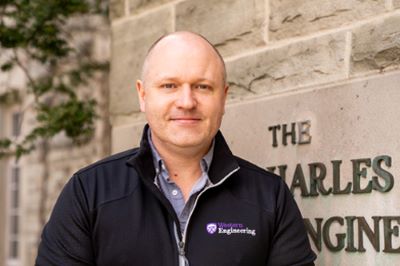 a complementary project focused on non-invasive geophysical monitoring of geo-environmental processes. Traditional methods for studying underground pollution are often costly and limited in scope. Power’s research employs advanced imaging techniques to create a clearer, more detailed understanding of what’s happening below the surface. These innovative tools will allow scientists to better monitor environmental changes and protect natural ecosystems more efficiently and effectively.
https://news.westernu.ca/2025/10/western-researchers-cfi/
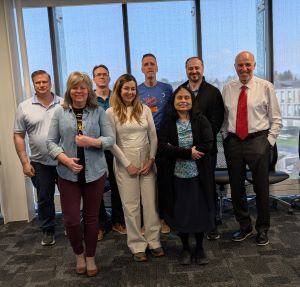
Monday, April 28, 2025Dr. Slobodan P. Simonovic and the Western Water Centre hosted an interactive 3-day workshop
TUESDAY, OCTOBER 1, 2024Martha Dagnew recognized as a trailblazer in environmental engineering
The Faculty of Engineering at Western University is proud to celebrate the recognition of Martha Dagnew, associate professor in the department of Civil and Environmental Engineering as one of the inaugural Canadian recipients of the prestigious 3M 25 Women in Science Program.
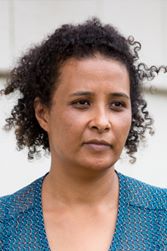 Dagnew, who also leads the Biofilm Engineering and Wastewater Resource Recovery Laboratory at Western University and directs the Greenway Wastewater Technology Testing Bay at the City of London's Greenway Pollution Control Plant, joins a cohort of exceptional women scientists whose innovative work is transforming the landscape of environmental sustainability.
"I am thrilled to be selected as the first Canadian cohort for the distinguished 3M 25 Women in Science Program; thank you team 3M,” said Dagnew.
One of her notable contributions is her work on source water protection, where she develops comprehensive frameworks, technologies and processes to safeguard source waters amidst changing environmental conditions. Her research encompasses a holistic approach to addressing water pollution and scarcity, focusing on developing smaller-footprint treatment technologies for existing and new water systems.
Dagnew 's pioneering efforts extend to her work on anaerobic membrane bioreactors for wastewater treatment. This innovative technology combines traditional anaerobic processes with membrane technology, offering a smaller footprint solution for water treatment while generating energy and recovering nutrients.
Now, as an associate professor at Western University, she leads groundbreaking research initiatives to protect source water in the face of climate change. Her work focuses on advancing nutrient load reduction techniques, encompassing energy-efficient membrane-aerated biofilm, ZeeLight and the passive rope-type BioCord media. Additionally, she is developing processes and technologies for destroying forever chemicals (PFAS), notably the innovative green ePFASx Tech.
“Representation in science has always been one of the biggest challenges, and highlighting women's work in STEM is essential to attracting more young girls into the sciences," emphasized Dagnew. Her dedication to empowering the next generation of scientists underscores her commitment to fostering diversity and inclusivity in STEM fields.
In recognition of her contributions to science, Dagnew will also be included in the digital book 25 Women in Science 2024, which will be released later this year.
TUESDAY, SEPTEMBER 24, 2024Western Engineering PhD candidates win President’s Challenge with Mobile MRI
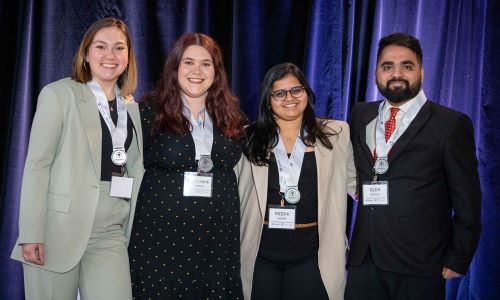
From l-to-r: Maxine Montpetit, Jaimy Hannah, Riddhi Gadre and Glen DSouza. (photo by Brandon MacIntosh/Ivey)
Western Engineering PhD candidates Riddhi Gadre and Glen DSouza and their team, Mobile Diagnostic Imaging, have been named winners of Western University’s inaugural President’s Challenge.
The challenge saw hundreds of students, using interdisciplinary knowledge and tapping into Western’s entrepreneurial expertise, to tackle a major societal challenge – keeping Canadians out of the hospital.
“At Western, we really want to challenge our community to think about big solutions to tough problems – and how they can make an impact – especially our students,” Western President Alan Shepard said.
“The President’s Challenge is an opportunity to bring forward unique, creative ideas while also developing the entrepreneurial and leadership skills they need for their future careers.”
Gadre and DSouza’s team wanted to answer the question: What if a change in access could cut MRI wait times in half?
Gadre, a third-year chemical and biochemical engineering PhD candidate supervised by Western Engineering professors Kibret Mequanint and Ajay Ray, said one case study the team reviewed in the United Kingdom showed wait times were cut from 13 to six weeks using a mobile model at one hospital.
“We want to enhance the reach of our healthcare system into every corner, with effective time management for appointments allowing for quicker diagnosis and better patient outcomes,” she said.
The idea is to start with mobile imaging in major urban centres, home to large hospitals, and then work toward more rural locations.
Gadre and DSouza, a PhD candidate in chemical and biochemical engineering supervised by Western Engineering professors Madhumita Ray, Anand Prakash and Chunbao Xu, partnered with team members Maxine Montpetit, a master’s student in neuroscience and Jaimy Hannah, a PhD candidate in psychology, to enter the competition.
The President’s Challenge was launched with over 400 registrants and 120 teams, representing every faculty at Western University. There were 53 final submissions, of which ten were selected for the Semi-Finals at Western University on March 13. The top five teams presented at the finals on April 5 in Toronto.
TUESDAY, SEPTEMBER 24, 2024Glen Dsouza, a 4th-year PhD student at Western University was awarded second place in the SPE poster presentation
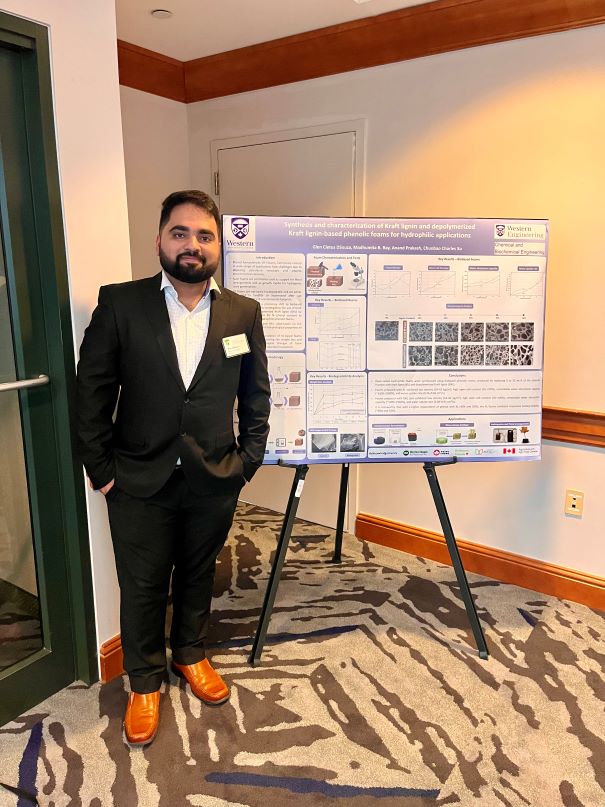
Glen DSouza, a fourth-year PhD student supervised by Drs. Madhumita Ray, Anand Prakash, and Chunbao Xu, was awarded second place in the Poster Presentation competition held during the Society of Plastic Engineers (SPE) Foams Conference 2024 in King of Prussia, PA, USA.
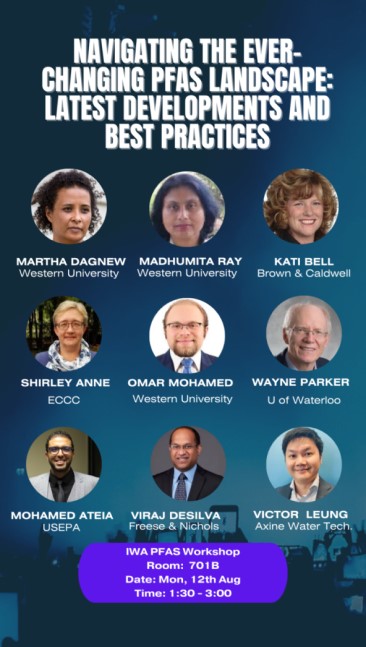
WEDNESDAY, AUGUST 14, 2024WWC organized a workshop in the International Water Association conference IWA World Water Congress & Exhibition, 11-15 August 2024, Toronto, CA.
https://https://worldwatercongress.org/exhibition/
Tuesday, January 16, 2024WWCTR will be supporting the CAWQ Conference on April 9, 2024
The symposium aims to unite professionals from diverse water quality management and research fields, fostering the presentation of advancements and innovations in science, engineering, and policy. The goal is to facilitate the exchange of information for the public benefit in Canada, fostering collaboration among universities, consultants, industries, and governments.
We invite submissions for both Podium and Poster presentations, as well as One-Slide-3 min presentations addressing the proposed symposium themes. The organizing committee also welcomes the submission of high-quality abstracts on themes not explicitly listed, provided they are rooted in innovative studies or commercial applications relevant to water quality issues in Canada.
Furthermore, those interested in organizing a special session are encouraged to reach out to the conference chair, Dr. Martha Dagnew (mdagnew@uwo.ca).
WEDNESDAY, MARCH 27, 2024Dr. Mohhamed Reza Najafi is one of 10 faculty to attract provincial funding for projects focused on health, homelessness and climate change
Flooding is the costliest natural hazard in Ontario, causing severe impacts on its communities and infrastructure systems, including Ottawa, where 2,196 dwellings were flooded in April 2019, and in Toronto and Southern Ontario in July 2013, amounting to $995.5 million in damage.
Traditionally, causes of flooding are analyzed in isolation without considering their interactions in time and space. Considering population growth and intensified weather extremes associated with climate change, there is an urgent demand for the development of reliable flood risk assessment approaches to protect Ontarians from future disasters.
This research will develop an integrated modelling framework to characterize the complex interactions between concurrent and sequential flood hazards across the entire Great Lakes basin.
The project will examine how various factors, including greenhouse gas increases and climate variability, interact to cause floods in Ontario. It will assess the impact of these factors on each other, determine the frequency of compound flood disasters, and identify the conditions leading to severe floods in the region.
The proposed innovative framework will lead to the development of effective mitigation and resilience strategies for small and large communities and infrastructure systems in Ontario.
Friday, November 10, 2023Glen DSouza, a third-year PhD student at Western University awarded first place at the 3 Minute Thesis (3MT) competition during the AIChE Annual Meeting
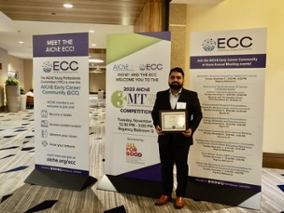
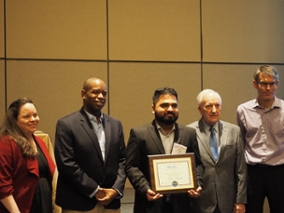
Glen DSouza, a third-year PhD student supervised by Drs. Madhumita Ray, Anand Prakash, and Chunbao Xu, was awarded first place at the 3 Minute Thesis (3MT) competition during the AIChE Annual Meeting in Orlando, Florida, last week. The preliminary round for the competition was held in June through video submission, and Glen was chosen among the top 12 finalists to present at the conference. The winning 3MT talk was based on his PhD thesis, exploring the boundless possibilities of forest waste-based foams in diverse applications such as hydroponics, floral arrangements, and environmental remediation.