
Climate-Resilient & Equitable Health Systems Infrastructure
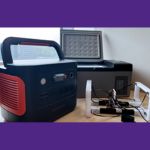
Cold Chain Storage
Led by: Maria Drangova
Partners: Makarere University, Uganda; Drop Access, Kenya
Technology Summary: This technology transforms widely available 12 V camping refrigerators into validated, medical-grade cold storage systems for vaccines and other temperature-sensitive medications. By integrating optimized solar panels, battery systems and continuous temperature monitoring, the units maintain the World Health Organization’s required 2–8 °C range — even in off-grid settings. The result is a reliable, low-cost cold chain solution built from mass-produced consumer equipment and re-engineered for global health impact.
Who it's for: This technology is designed for health clinics and community health providers in remote and low-resource settings where electricity is unreliable or unavailable. It supports families and patients who rely on consistent access to life-saving vaccines and medications.
See also: PhD Candidate, Kato Hussein Wabbi (Frugal Edge AI-Base Predictive Maintenance System)
HIV Diagnostics: HIV RNA Colormetric Test Kit
Led by: Arghya Paul
Partners: Joint Clinical Research Centre (JCRC), Uganda
Technology Summary: This project is developing a low-cost, rapid test kit to detect HIV viral RNA in blood samples through a visible colour change. Designed for use in local clinics and low-resource settings, the test is intended to operate at room temperature and provide results within 30 minutes, without the need for expensive or complex laboratory equipment. Detecting HIV RNA can support earlier identification of infection, often before the body has produced enough antibodies to be detected by standard rapid tests. The technology aims to offer a more affordable and accessible alternative for early HIV RNA detection, which is currently limited mainly to centralized hospital laboratories.
Who it's for: This innovation is designed for use in low-resource settings where access to HIV RNA testing is limited by cost, infrastructure, or the availability of specialized staff. It is particularly relevant for community clinics and rural health-care facilities in countries such as Uganda, where earlier HIV detection could support timely antiretroviral treatment and potentially help reduce HIV-related mortality.
See also: PhD Candidate, Jiaqi (Jackie) Huang (bio coming soon)
Low-Cost Materials Testing
Led by: David Holdsworth, Maria Drangova
Partners: Makarere University, Uganda; Kenyatta University, Kenya
Technology Summary: This project is co-developing a low-cost alternative to commercial material testing systems used in biomedical engineering training. Built from common off-the-shelf mechanical components and controlled using open-source software on a Raspberry Pi Pico microcontroller, the prototype enables soft-tissue and low-modulus material testing at a fraction of the typical $50,000+ cost. The goal is to create an open-source device that can be easily assembled, distributed, and adapted in low-resource educational settings.
Who it's for: This technology is designed for biomedical engineering programs and training institutions in low- and middle-income countries that cannot afford commercial material testing equipment. It supports hands-on education and research capacity building in resource-constrained environments.
Malaria Diagnostics
Optical Microscopy
Led by: Ian Cunningham
Partners: Mbarara University; Mbara Regional Hospital, Uganda
Technology Summary: This project is developing a low-cost, battery-operated digital microscope capable of 1-micron resolution with a 1-mm field of view for point-of-care malaria diagnosis. Using 3D-printed components, computational optics, and a Raspberry Pi computer, the team has demonstrated proof-of-concept performance at a fraction of the cost of conventional laboratory microscopes. Led by researchers at the Robarts Research Institute in collaboration with partners in Uganda, the goal is to enable rapid, high-quality imaging in rural settings where timely diagnosis is critical.
Who it's for: This technology is designed for health-care providers and laboratories in rural and low-resource regions where access to conventional microscopy is limited. It supports faster malaria diagnosis so treatment can begin promptly and lives can be saved.
Loop-Mediated Isotherman Amplification (LAMP) System
Led by: Kibret Mequanint
Partners: Tropical and Infectious Disease Research Centre (TIDRC), Ethiopia; Jimma Institute of Technology (JIT), Ethiopia
Technology Summary: This project is developing a low-cost, battery-powered LAMP (Loop-Mediated Isothermal Amplification) device to detect and quantify malaria parasites in low-resource settings. Designed for use in rural clinics with unreliable electricity, the system operates at room temperature, delivers rapid results, and automates interpretation to reduce human error. By combining affordability, portability, and accurate quantification, the device aims to strengthen early diagnosis and treatment in regions most affected by malaria.
Who it's for: This technology is designed for frontline health workers and rural clinics in malaria-endemic regions, particularly across sub-Saharan Africa. It supports timely, accurate diagnosis in communities where conventional laboratory testing is inaccessible or unaffordable.
See also: PhD Candidate, Etagegnehu Dagnachew Feleke (Low-Cost Loop-Medicated Isothermal Amplification (LAMP) System for Malaria Diagnosis
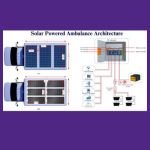
Mobile Solar Power for Medical Equipment
Led by: Joshua Pearce
Partners: Bahir Dar University, Ethiopia; Varendra University, Bangladesh
Technology Summary: This project is designing and developing an affordable, portable electrical power supply system based on solar photovoltaic (PV) technology to operate portable oxygen concentrators in developing countries. The system is modular, open source, and engineered for local fabrication using accessible components and makerspace infrastructure. By enabling reliable off-grid power, it supports uninterrupted oxygen therapy in low-resource settings.
Who it's for: This technology is intended for health-care facilities and patients in developing countries where electricity is unreliable or unavailable. It supports access to oxygen therapy in remote and resource-constrained environments.
Related Publications: Open-source solar device for ambulances
See also: MESc Candidate, Sara Khan (Open-Source Solar Powered DC Nanogrid for Medical Applications)