
Inclusive Chronic Care & Rehabilitation
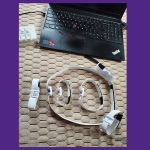
Parkinson's Monitoring
Led by: Ana Luisa Trejos
Partners: Kwara State University, Nigeria; University of South Carolina, USA
Technology Summary: This project is testing wearable sensor technology integrated into clothing and textiles to monitor Parkinson’s disease symptoms in real time. The system tracks tremors, freezing episodes, and slowness of movement, pairing full-body motion sensing with customizable software to support diagnosis and disease monitoring. Field testing in Nigeria is helping adapt the technology to local environments, infrastructure, and manufacturing capacity.
Who it's for: This technology is designed for people with Parkinson’s disease, clinicians, and caregivers in low-resource settings where access to diagnostic and monitoring tools is limited. It aims to support earlier diagnosis and more informed symptom management in communities across Nigeria.
See also: PhD Candidate, Olusoji Ogunbode (An Unobtrusive Wearable Sensing Device for People with Parkinsons Disease)
Prosthetics (3D printed limbs)
Led by: Amare Kassaw Yimmer, Ethiopia
Partners: Tarek Loubani
Technology Summary: This project is developing affordable, 3D-printed, body-powered prosthetic hands for upper-limb amputees in Ethiopia. Using open-source designs such as the Unlimited Arm V2.2 and locally available 3D printing with PETG materials, the team produces functional, mechanical hands that enable users to perform daily tasks rather than serving only cosmetic purposes. The initiative is led at the Bahir Dar University in collaboration with international partners to expand access and local manufacturing capacity.
Who it's for: This technology is designed for upper-limb amputees in Ethiopia, particularly individuals who cannot access functional or affordable prosthetic devices. It aims to restore independence and improve daily living through locally produced, task-oriented prosthetics.
TRUVU Xray
Led by: Emily Lalone
Partners: Newfoundland & Labrador Health Services; St. Joseph's Health Care; Fanshawe College, Canada
Technology Summary: This project is developing a positioning tool that helps health-care providers accurately and repeatably align the wrist for common X-rays. Designed for use in low-resource settings where allied health professionals often perform imaging without specialized radiography training, the tool aims to improve image quality and diagnostic accuracy. By reducing positioning errors, it helps decrease repeat imaging, medical waste, and unnecessary image requisitioning.
Who it's for: This technology is designed for radiographers and allied health professionals working in medically remote communities across Northern Canada. It supports more reliable musculoskeletal imaging in settings with limited access to specialized training and equipment.
See also: PhD Candidate, Laura Vancer (Standardizing Wrist Radiography Across Canada: Validating the TRU-VU Wrist Positioning Aid)
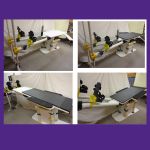
Open-Source Surgical Table
Led by: Joshua Pearce
Partners: Makarare University, Uganda; Glia
Technology Summary: This project is replicating and refining an open-source surgical fracture table that delivers the core functions of commercial models costing over US$200,000 for approximately US$3,000 in materials. The design incorporates 3D-printed specialty components and locally sourced materials, and will be reproduced in Uganda using locally available tools and manufacturing methods. Ongoing work focuses on improving mechanical stability, clinical usability, and adaptability while gathering clinical feedback to further reduce costs.
Who it's for: This technology is designed for hospitals and surgical teams in low-resource settings that cannot afford or maintain commercial orthopedic fracture tables. It aims to expand access to safe, effective orthopedic surgery using locally buildable equipment.
Related publications: Fracture table for digitally distributed manufacturing
See Also: MESc Candidate, Rebecca Nansubuga (Piloting the Frugal Surgical Fracture Table for Muskoskeletal Trauma in Uganda)